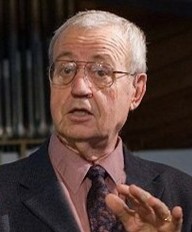
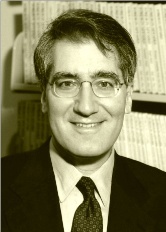
1. Professor Harvey C. Mansfield, Jr. at Harvard University
2. Professor Dallas Willard at the University of Southern California
3. Professor Robert P. George at Princeton University
A Conversation with Professor Harvey C. Mansfield
"Hollow to the Core"
Dr. Harvey Mansfield
Dr. Harvey Mansfield,
a distinguished professor of government at Harvard, and a graduate of
Harvard College himself, is a serious scholar who demands a lot of his
students, a fact that earned him the nickname Harvey “C-minus”
Mansfield. The push for “grade inflation” from both the faculty and the
administration provoked him to propose a new system that would surely
satisfy everyone: namely, that each student should receive two course
grades. The first grade would build the ego and satisfy Mom and Dad, and
the second, somewhat lower no doubt, would be an honest assessment of
the student’s accomplishments.In his widely discussed editorial in the Wall Street Journal,
in which he made this “modest proposal,” the professor provoked both
howls and cheers, much to his own delight.
In the end, however, grade
inflation is yet another indication that liberals have mismanaged the
universities. Professors have not been true to themselves but have
treated students as spoiled, wealthy brats, which were the very ones the
sixties radicals set out to displace.
The longer range problem is that
elite schools like Harvard, Yale, Stanford, MIT, and others have lowered
standards to such an extent that they are now graduating students who
lack the competencies upon which the reputations of these institutions
were built. And who knows where this will lead?
On Shaky Ground
When
I met with Dr. Mansfield at his office in Littauer Hall, on the Harvard
campus, I asked him what the fallout of his modest proposal for
double-grading had been. “Well, it was essentially a publicity stunt,”
he said, “and it worked. It was intended to draw attention to grading
practices, and despite the fact that this over-grading has been going on
for decades, it’s true that a lot of professors and students didn’t
realize the extent to which we were compromised by it. We have been
giving about half A’s and A-minuses. It’s incredible!”
I said,
“It would probably be more noticeable at another university where the
SAT score of the average student is somewhat lower.”
“That’s one
of the excuses we hear,” he said, “but when I first came to Harvard as a
17-year-old freshman, I realized I was suddenly in the big leagues. It
wasn’t going to be like high school anymore. But nowadays, it’s more
like a continuation of high school, because you still get the same high
grades you got before.”
“The trick is getting in,” I said.
“That’s right. The trick is getting in "
“What about
the level of general knowledge among entering freshman,” I asked, “how
does it compare to when you came here as an undergraduate?”
“Oh,
that’s very shaky. They’re better in math and science than
in my time, but they don’t know much history, and they haven’t had much
practice in writing. The effect of that is compensated somewhat by the
fact that many of them have natural talent — they’re smart kids and they
catch on quickly — but they have large gaps in their knowledge. They
catch on quickly if they take the right courses, but since there are few
requirements and no mandatory survey courses, a lot of them don’t.”
“The course catalog is enormous,” I said. “I don’t know how students manage it.”
“That’s
true,” he said. “There’s such a variety of courses; they’re scattered
all over the place, and there’s a vast range of choice despite the fact
that we have a core curriculum, which amounts to about a year’s worth of
courses. Nonetheless, there are so many ways of satisfying the
requirements that you don’t have to take anything important or
significant. The core isn’t really a core; it’s really just an approach
at one.”
“There are required English courses, I understand, but
they’re nothing like the survey courses you and I had to take as
undergraduates,” I said.
“That’s exactly right,” he said, “and
the students really miss that. On the other hand, they like taking all
these odd things; they’re struck by this or that course title, so they
end up with transcripts that are a hodgepodge, with no coherence.”
“Unless
they’re coming back for graduate school,” I said, “students don’t
understand that they haven’t actually learned very much in the course of
a four-year education.”
“I think they know,” he said. “They
know the easy courses and they know they could have taken something more
challenging. I don’t think they’re really satisfied with what they’ve
got. These are smart people so they know when they’ve had it easy.”
I
said, “Recently I spoke to a colleague at a major university who told
me he sees some students with SAT scores as low as 300 to 400, far below
the typical entrance requirement, but because they’re from one of the
preferred minorities they get in. They take mostly junk courses for four
years, learn next to nothing, and then graduate along with everybody
else. Any way you look at that, it’s unfair to everyone concerned, and
not least to the student who knows he hasn’t acquired the knowledge
he’ll be expected to demonstrate on the job.”
“The shocking
thing,” Mansfield said, “is that even Harvard students, who have much
higher SAT scores than that, also end up with very imperfect educations.
I think that’s why the university president, Larry Summers, is talking
about restoring some of those survey courses that have been greatly
missed. He’s working on a revision of the undergraduate curriculum,
including the core curriculum. And one of the things he mentioned was
the lack of survey courses in the humanities.”
“Since
you’ve been here as a student, grad student, and a faculty member for,
gosh, over fifty years,” I said, “you’re certainly in the best position
to tell me what’s up with the curriculum. What’s the impact of the
dumbing down that’s been going on over the past thirty or forty years?”
“Requirements
have diminished, very much,” he said, “and the number of courses given
has increased. The coherence has been lost. There always was a good deal
of choice at Harvard. We had a president in the nineteenth century,
Charles W. Eliot, who set up the so-called elective system, but it’s out
of control now. When I came here there were a few easy courses — we
called them ‘gut courses’ — athletes and ‘Gentleman’s C’ students took
them. But most people looked down on those courses and regarded them
with amused contempt. But now the gut courses have proliferated, and
they’re regarded as more legitimate than they used to be. It was only
with a certain amount of embarrassment that you’d tell someone that you
were taking one of those, and everybody would know you were taking it
easy. But now the attitude toward those courses has changed.”
Losing their Passion
How do the courses you took as an undergraduate compare to the courses being offered at Harvard today?” I said.
“They’re
a lot easier now,” he said. "Math and science are still done well, and
languages are done well, but the social science and humanities courses
are much easier and don’t require either as much reading or writing as
they used to; and this whole core (which amounts to about a quarter of
the student’s entire requirement) is not respected by the students, or
the faculty either. Those are often courses where the professor tries to
make a difficult thing seem simpler, in order to attract more students,
or to please undergraduates who are being asked to take something they
might not ordinarily take. There’s been a whole change toward a more
consumerist attitude, and I think students are looked on now as
consumers whom you have to please. It’s not for them to please us, but
we’re to please them.”
“I assume professors are doing this for
their own careers,” I said. “If they have students clamoring for their
courses, they’re going to be considered more important, and this means
of course that the student evaluations are more important than ever.”
“Yes,
of course,” he said. “Course evaluations from the students are very
important in getting promoted, and all this has contributed greatly to
grade inflation.”
“Is it pressure from the students that forces professors to try to please them?”
“It
isn’t so much pressure from the students but the view of the faculty,”
he said. “The faculty think they ought to please students. And the
students get used to this and naturally complain when it doesn’t happen.
It began in the late sixties when the professors didn’t lose but
actively surrendered their authority.”
“Another thing that
concerns me,” I said, “is the future of the professor, and if there’s
going to be anyone qualified to carry on the great tradition. Thirty or
forty years of grinding down standards and curriculum have had a visible
impact on the caliber of scholars and scholarship, and instead of
having real core knowledge a lot of professors today have theories about
knowledge, and that’s troubling. Do you think we’ll have men and women
capable of stepping into your shoes when the time comes?”
“I
think so. There are some good graduate students. This is a place where
political correctness reigns supreme and conservatives have a lot more
trouble getting jobs than those who aren’t conservatives. That reflects
the power of liberal faculties around the United States, and that’s what
hurts me most, to see students who’ve spent years getting their Ph.D.
degrees, becoming quite learned and doing good work, but not being able
to get a job. In a way, however, it has helped conservatism politically
because a lot of them, therefore, went to Washington instead of into the
teaching professions. If only the liberals had known! They could have
prevented that by giving them jobs in small backwater colleges where
they would have been safe and out of the way!”
“Will it get to the point where there aren’t any more conservative professors on campus?”
“No,
I’m more optimistic than that,” he said. “I see a lot more
conservatives among undergraduates these days, and especially among
those going into the professions. I think things may be getting better,
partly because I’m impressed with our new president, Larry Summers,
who’s been heard to say he wants more conservatives on this faculty.”
“How
did he get hired?!” I said with a laugh. “But let me follow up on what
you just said: You’re optimistic? Is that right? I’d like to know how
you can be optimistic in light of the chaos of cultural and moral values
on campus, not to mention the lack of a solid curriculum.”
“I
can’t really give any evidence why I should be optimistic, but I don’t
think this can continue much longer. There’s such a contradiction
between the constant talk of diversity and the failure to practice it. I
think this is being picked up by the students, and the time will come
when the Left will be forced to concede some positions. I would cite
this evidence, as I said before, that those on the Left lack conviction.
They’re push-overs.
“I can tell you,” he added, “that they were
stunned by the attitude of the American people after 9/11. It was an
affront to their multiculturalism. There are people who hate us, who
want to kill us: how do you explain that? I thought it was so wonderful
when President Bush used the four-letter word, Evil! They might not
admit it, but the liberals in our midst have to confront the fact of
evil.”
“It’s sad to think it had to take a major disaster to
make people wake up,” I said. “I wonder if it’s going to take another
one, or something even worse, before some people will get the picture. I
wouldn’t be surprised, seeing the way things are going at the moment,
that we very well may see something else in the future.”
“Oh, yes! If we don’t prevent it, we’ll see it,” he said.
“And
the Left’s position plays right into that. If you read the New York
Times, you get the idea that they’d be perfectly happy if American
diplomacy would just stop where it is right now, if America would get
out of the Middle East and just let nature take its course. But that
would be a terrible disaster; only, they can’t see it.”
“Here’s
another piece of evidence,” Mansfield said. “That kind of thinking has
much less effect here on this campus than it did ten or twenty years
ago, to say nothing of the 1960s.”
“Really? That’s the most
amazing thing you’ve said! Is it because they’ve lost their passion? One
thing I know about political action, going back to my own graduate
studies in the seventies, is that the one thing the Left always had was
plenty of passion. They were shockingly ignorant on most issues, but
they had a great deal of passion.”
“Yes, that’s changed,” he
said. “They had ideas but they haven’t worked. They were able to set an
agenda for government, the media, the universities, but didn’t see any
fruit from it.”
The Best Advice
“On
that note,” I said, “what’s your advice to the mothers and fathers of
America who are preparing their children to apply to places like
Harvard? Is there anything they should know before they go through this
process?”
“Oh, for sure! They should know that most of the
choices their children will be confronted with when they come to Harvard
are bad or misleading, and that they need to get some good advice. In
the first place, to use common sense, but to get good advice from
students with conservative opinions, from the faculty, or from their
parents as to the choice of courses as well as the way to live.
“I
haven’t talked much about this,” he continued, “and I don’t really get
into the moral or sexual climate all that much, but there are a lot of
bad things going on, including the so-called ‘hook-ups’ between students
and others on campus. I’ve been looking into this, doing some research
in the area of ‘manliness’ for a course I taught last year. We had a
report from a committee dealing with sexual assault in which it was said
that many young adults want to engage in ‘experimentation with sexual
intimacy.’ That’s what they said. It wasn’t recommended, but it also
wasn’t discouraged; and nobody said that many young adults really don’t
want to do that.
“So when you send your child to Harvard,” Dr.
Mansfield said, “you need to know there are all sorts of temptations of
this sort, so you have to speak in a way that you think is going to be
most effective, using the Bible or using common sense, or both. But bad
things can happen to you here if you take up with that kind of
‘experimentation.’ If you’re going to find out something new in a
laboratory, let it be about science and not something you’ll regret the
rest of your life.”
“I’ve been seeing some of the new statistics
of STDs, HIV, rape, suicide, and all those things,” I said, “ and the
way these figures have skyrocketed on the university campus is really
frightening. You can ruin your life that way, very easily.”
“Yes,
that’s right. There’s a notion that you can have sex quickly and
without love — it won’t hurt you — especially for the women. They think
this is a new thing, but that would have to be a major concern for a
parent. And it’s not just Harvard. I’m sure it’s a problem at any of the
bigger schools, but in today’s climate it’s a concern at practically
any college in the country, except one or two where there’s a deliberate
and pervasive moral climate.”
“What about academics?” I said. “What are your concerns in that regard?”
“The
lack of core courses that reflect some deliberation by the faculty
about what’s important for an educated person to know,” he said. “I
would say that’s the number one thing.”
“Does the politically correct view of ‘dead white European male’ militate against that?” I said.
“Yes,
it militates against it ever happening so long as the professors now in
charge remain in charge. But, as I say, I believe that their beliefs
are being shaken, and they will be shaken even further. Consequently, I
think they can be led — or maybe in some cases coerced — into a more
disciplined education. On the other hand, political correctness isn’t
retreating yet, even though it’s not believed as fervently as it used to
be.”
“I’m glad to hear that there are going to be changes to the
core curriculum,” I said, “and that it may soon become more
comprehensive and rigorous, but the current core is pretty fluffy, seems
to me.”
“It is,” he said. “It’s a core that consists of
approaches. So students learn the historical approach; for example, or
the social-science approach; they don’t learn what’s the most important
history or which literary works, for example, are considered to be the
greatest books and authors.”
“Who’s to say?” I said, with a
laugh. “That’s what students say to me when I bring up the subject of
‘great literature.’ I asked one young man if he had been exposed to the
great books and he reacted almost in shock. ‘Oh, no!’ he said. ‘We don’t
talk about great anything!’ You have to wonder what students are
learning when their professors refuse to say that anything is great or a
classic; the view is that all works of literature are of essentially
equal value. Frankly, I’m shocked to know that my degree field of
comparative literature is one of the worst.”
“Yes, it is. It’s
one of the worst,” Dr. Mansfield said. “And the romance languages are
about the same, along with sociology. Government, on the whole, is one
of the better ones. Economics is also one of the better ones at Harvard.
But the humanities — especially comparative literature, English, and
languages — those are all pretty bad.”
“What else?” I asked. “Any final thoughts?”
“Yes,”
he said, “I think it’s important not to lose hope altogether. The
knowledge is still there to be had, and there are teachers who are still
authentic and dedicated to the profession. I would say that to the
parents of children who are coming to college. It’s still possible to
get an education; there are a few mavericks around, especially at the
larger schools. There are still a few decent and honest professors. In
the smaller colleges I think the situation may be worse, because there
the faculty all know each other and hiring is done more on the basis of
potential friendships or sharing of opinions than it is here. But you
have to look for those things, and you have to make your wishes clear.
Parents have a lot more power than they realize, if they will only use
it to get people to listen to their concerns.”
Making the System Work
For
education to work at any level, as Professor Mansfield makes clear,
there must be standards. At the elementary and secondary school levels,
students have to develop skills in the fundamentals that will allow them
to acquire the kinds of knowledge they’ll need, not just for successful
university careers but to become good citizens. For those who are
headed for the job market, there must be sufficient mastery of the
language and computational skills they’ll need to hold a job. And those
admitted to colleges have to be able to perform at a reasonably high
level of academic competency if the term “higher education” is to have
any meaning.
As serious as the problems on the university campuses may be, it’s important to recognize that the collapse of traditional learning could not have happened without the complicity and silence of the individuals, agencies, and special-interest groups that surround and influence the universities. There are many willing collaborators. Administrators, faculty members, and academic institutes are abetted in their work by government bureaucrats and their agencies, teachers unions and guilds of various sorts, the mass media above all, and even by parents who either aren’t paying attention or don’t want to get involved in the battles raging in the schools. Without their silence and moral equivocation, the freefall of the American university could not have happened.
This is a point that emerged most clearly in my conversation with Dr.
Dallas Willard, a professor of philosophy at the University of Southern
California, and a distinguished author and lecturer in philosophy and
ethics.
Dr. Willard, who passed away in 2013, earned his bachelors and masters degrees at Baylor University and a doctorate in philosophy, minoring in the history of science, at the University of Wisconsin. He served as director of the school of philosophy at USC from 1982-1985. In this interview from 1993, Dr. Willard spoke candidly about his own concerns for the decline of academic standards.
His professional publications focus on logic, epistemology, and the acquisition and application of knowledge, and include his original translations of the writings of the German philosopher Edmund Husserl. Other published works include a translation of Husserl's Philosophy of Arithmetic, Logic and the Objectivity of Knowledge, which deals with Husserl's early philosophy. Dr. Willard also lectured on the relationships between science and religion. His book Renovation of the Heart won the 2003 National Book Award of Christianity Today magazine. His classic work, The Divine Conspiracy, released in 1998, was Christianity Today's “Book of the Year.” Other works include The Spirit of the Disciplines (1988), Hearing God (1999), and In Search of Guidance (1984).
“A few weeks ago,” I said to him over dinner one evening, “I met with a young man at Bowdoin College who told me that on the evening of the 9/11 attacks, the faculty called a forum to watch President Bush’s speech on television and then to talk about the issues it raised. What surprised him, he told me, was the fact that, while the students generally agreed that it was a great patriotic speech, the faculty members were horrified by what the President had said.”
“It’s an example of what I call ‘the politics of contempt,’” said Dr. Willard. “This is now the main form of political thinking by those on the left. I have to admit that conservatives are not entirely without blame on this point, but the liberals have refined it to an art form. It’s accusation by innuendo, name-calling, and suggestion. If you look closely, you quickly discover that they don’t have any arguments, and that’s the center of the issue. What we have now on the faculties of most universities is people who are basically governed by the professional associations. Their most important contacts are not with students or even fellow faculty members, and certainly not with the administration, but with their professional associations.”
“They’ve got to be published in the right journals if they expect to get tenure and be promoted,” I said. “But does this mean that they care more about the colleagues they see maybe once or twice a year than they care about the ones they see everyday?”
“Absolutely. This is because the conditions of their success are tied to that. You see, the university no longer evaluates its faculty; it asks other people to evaluate them, and these other people are people who are considered to be the luminaries in their professions. Professionalism had not really taken hold in the American university system until the seventies. It hadn’t taken hold in the sixties, partly because the number of people involved in higher education in the forties and fifties was still so small. It wasn’t like it is now, but the GI Bill changed a lot of that. Things like avoiding the draft changed it, as well. One of the interesting things that happened in the sixties is that whole segments of the population that never would have thought about going to college before were suddenly coming in.
“When I started teaching at USC,” he added, “the annual dinner for the American Psychological Association was about 10 to 15 people. They were the ones who were active. Now it’s thousands of people, and they don’t have the dinners anymore. When you go to the APA Convention in New York or Boston, you see these massive crowds. Faithfulness to things like truth and research and students and love for teaching is nowhere to be seen: it’s all about reputation and standing and how you’re evaluated by your peers.”
The End of Teaching
I said, “It’s shocking to realize that even senior professors no longer consider teaching to be their primary objective.”
“Yes, I agree,” he said. “But it’s very interesting. The reward for faculty members who do good work is more research and less teaching. I once asked a group of senior administrators, ‘If the reward for good research is more research, then why isn’t the reward for good teaching more teaching?’ They didn’t really have an answer for that. It’s not what most professors are interested in.”
“Several of the students I’ve seen recently,” I said, “told me that part of the problem is that they rarely if ever see an actual faculty member. They see them sometimes for the first lecture, but then it’s teaching assistants and discussion-group leaders for most of the actual class sessions.”
“Yes, and they’re not the quality of TAs we used to have,” he said, “precisely because they’re not interested in the fundamental things: truth, honest research, and pouring their knowledge of the subject into their students.”
“Professors have always chosen TAs because they see something in them,” I said. “It used to be that professors would say, ‘I see something in that person that can be developed, and I want to guide them along and help them to become serious scholars.’ But that’s changed. And I suspect that many on the left are saying, ‘Aha! Here’s someone who will buy everything I say!’ So they set out to shape and mold that person into a perfect little clone.”
“Yes, and that goes to the heart of the matter,” said Dr. Willard. “No longer do you evaluate a person in terms of their arguments; rather, you evaluate their arguments in terms of their position. And if the position is wrong, if they’re not in some role that automatically confers distinction, then you don’t need to bother with them. So ad hominem attacks on people are now standard fare. They say, ‘You hold certain views, therefore you’re disqualified from serious consideration.’
“And that also means disqualifying outstanding people like Justices Scalia and Thomas, or even Chief Justice Rehnquist, because they hold generally conservative views. It’s outrageous, but that’s what’s happening.”
“Sociologically,” he said, “this goes hand-in-hand with something that started in the 1880s but didn’t really take hold until the 1940s, and that is divorcing the universities from their religious foundations. In 1848, as George Marsden reports, two-thirds of the presidents of the state colleges were clergymen. The nineteenth century still valued the importance of religious instruction, and that’s why they chose people who were religiously trained to administer public education. But things began to change about that time and the primary battles were fought around people who were willing to put their minds away to protect their denominational distinctives.
“At the center of this,” Dr. Willard said, “was what they called ‘The 39 Distinctives’ of the Anglican church, and there were some horrendous battles during those years as more and more professors began to resist loyalty oaths of one sort or another. You had to swear fealty to those 39 articles or you weren’t allowed to teach. Sometimes it was subtle and sometimes it was brutal, but it was a bad policy, and something had to happen.”.
“So was this going on in Britain and the U.S. at the same time?” I asked.
“It was a different denominational setting at Harvard and Yale than they had in Great Britain,” he said. “It was important for the universities to divorce themselves from the church, but it was not necessary for them to throw the teachings of the church away in the process. Some of the reformers wanted to find ways to maintain a theological position, but they never managed to do that, so there was a wave of defections followed by a wave of institutions arising to combat that. Some of the most aggressive ones were not founded so much as institutions of higher learning as they were institutions for people who wanted to remain Baptists or Methodists or Catholics, or whatever.”
“Sounds like they wanted to create their own alternative world,” I said. “Yes, it was an alternative world,” he said, “but now that wave of colleges is on their way out.” “Which is not a bad thing,” I said, “so long as they have the capacity to maintain both intellectual rigor and spiritual discipline.”
“They have to do that,” he said, “but the question is, How to do it?, and that hasn’t been solved yet in the university setting. James Davison Hunter’s book, Evangelicals in the Coming Generation, really tells that story. But if a college president who is a Christian reads that book, what’s he going to do? What’s he going to do about the situation that Hunter describes, where you have a faculty that is mostly Christian while many of the students simply don’t believe the things the school says they need to believe?”
“They don’t adhere to the school’s charter anymore?” I said. “No, they don’t,” he said. “So you have those two things sociologically: the divorce of the universities from the church and the loss of spiritual discipline, or any religious principles.”
No Place for Truth
“America’s founding documents held that religion and moral instruction were essential for the maintenance of good government,” I said, “and this, they believed, was why schools were to be established in every community — for the education and moral instruction of the children. But that idea is considered intellectual heresy these days.”
He said, “It’s also why the first spelling books and copy books, like the McGuffey’s Readers, taught children how to read and write using Scripture verses for instruction and writing practice. They would say things like, ‘Love your neighbor as yourself,’ and students would practice their penmanship by writing that phrase over and over in the copy books.”
“Now we find ourselves in the position of having the words, ‘You shall know the truth, and the truth shall make you free,’ carved over the gates of our great universities. At Harvard,” I said, “they’re on the walls of the Widener Library, but nobody knows where they come from.”
“Those words of Jesus,” said Dr. Willard, “tell us what the university is supposed to be about. It’s the one statement, in fact, most often carved into the walls of universities around the world. But, as you say, few make the connection to the one who spoke those words.
“Sociologically, it was the divorce of the universities from the church,” he said, “that led to the divorce of the intellectual enterprise from the church. I believe that was not necessary, but after the Civil War the country began to realize that the development of knowledge was an economic and political necessity. That’s when the German model of the research university first appeared in this country. The British model, which was designed to teach truth and train character, was put aside. So today every college wants to be a university and every university wants to be a research institution. None of them wants to be a knowledge university any longer. The idea of teaching students specific information has become a laughable proposition.”
“No one wants to train the next generation in the values of the current generation,” I said, “which means that the fundamentals of Western civilization are scorned and virtually forbidden on most campuses. I spoke to Donald Kagan at length about the controversy at Yale over the proposal from Lee and Perry Bass to expand the history curriculum. The faculty simply wouldn’t consider it, and the administration drug their heels so long the money went away. It was a total dismissal of the idea of Western civilization. The professors at Yale said, in effect, ‘How outrageous of you to ask us to put $20 million into a program that teaches the history of our culture!’”
“It didn’t make sense to them,” he said, “and that’s the tragedy. That’s because the only moral model left is the model of the ‘rebel,’ and the rebel’s job is to attack hypocrisy.”
“We tend to think so much has changed since the sixties,” I said, “but in reality not much has really changed, because the only thing the Left had to offer when they took over at Berkeley and Columbia was invective, accusations, name-calling, and anger. They had nothing to go on but untested theories and empty rhetoric, and that’s what we see from leftist faculty members in university lecture halls to this day.”
“The Marxist idea was that rhetoric is everything, and everything is political,” he said. “And, of course, people like Jacques Derrida and Richard Rorty are still saying that. Rorty famously defined truth as ‘whatever your colleagues will let you get away with.’ What they will let you get away with today depends on your rhetoric, and your rhetoric depends upon being an outsider or a rebel, and having that model. In the classrooms, people can morally pontificate ad nauseum, so long as it’s against traditional values, because that means they’re a rebel, they’re authentic, and there’s even the possibility they’re persecuted for their ‘courage.’ So that’s the standard, and then you get all the sub-rhetoric that comes out of the specializations. And that means you’re really okay because someone else in your area of specialization says you’re okay.”
“If you pass muster at the APA,” I said, “then, ‘You’re okay by me!’” “Precisely,” he said, “I think that’s the sociology on the issue of change.” “How about students?” I said. “How have they changed since the sixties?” “One of the wonderful things about our students,” he said, “is that they’re new, and they’re still young. But they’re tremendously gun-shy.”
“The faculty member is like a super-parent,” I said, “and if he or she doesn’t like ...”
“Oh, no!” he said abruptly. “They don’t admit that. It’s the old in loco parentis principle. The model now is to deny in loco parentis while you practice it in the classroom. One of the things you have to understand about the present situation is that professors influences students’ thinking by their body language, intonation, by the things they assign and the things they don’t assign. They negotiate a position of objective distance but with authority over the moral context of the classroom. The university may have no use for religion anymore, but it teaches a morality that’s more rigorous than any Puritanism you’ve ever seen! All you have to do is get cross-wise with it and you’ll find out suddenly that you’re a bad person!”
The Failure of Atheism
“Obviously, a lot of parents don’t have any idea what’s really happening on campus,” he said. “But now that you’ve been all around the country doing these interviews, do you get the feeling that the academy is in denial about what’s happening?”
“As a matter of fact,” I said, “Arnold Beichman at the Hoover Institution suggested I read the new book by Haynes and Klehr called In Denial: Historians, Communism & Espionage, so I’ve been taking it with me to read on the plane. Essentially it says that professional historians in this country have defended the whole sordid history of socialism and communism, and they’re in denial about the tragic consequences of that belief system throughout its entire history. Because they refuse to admit the dark secrets of the death camps, of mind-control, and the other horrors of socialist indoctrination, the Left in this country has been pushing socialism down our throats so successfully that it’s now the dominant view — not just in the history departments but in the university as a whole. Liberals on the campuses refuse to see that the values of Western capitalist societies are just the opposite of that. Wherever you look, you find that benevolent free-market economies have lifted people out of darkness and put them in charge of their own lives. But the academy refuses to see any of that. Instead, they just look the other way, and continue defending the evils of Marxism and socialism.”
“I believe there’s an element of truth to that,” Dr. Willard responded, “but I think you need to be sure and do justice to the good will of many of these people. I think where many of the books on the problems with the modern university go wrong is that they come across as attacking the intentions of these people. What one has to do, I believe, is to recognize that there’s a problem; an ego investment often leads people to falsify facts in order to make things come out at the right place. It’s the same way with the media, when you look at the liberal bias of the media. For the most part, they’re very liberal, but frankly, they’re also uncomprehending of what people are talking about when they accuse them of liberal bias. They don’t intend to be biased, so they protest their innocence. But if you don’t want to be biased, you have to take an active stand against it. I wish I could teach logic more often, but when I do teach it, I tell the students that being logical is a moral commitment. You have to take this as something you do to be a good person, and if you don’t do that, you’ll be overrun.”
“That’s another reason why logic is foundational to any course of study,” I said.
“Another thing is that a lot of people within the professoriate don’t really understand the positions that are dominating the academy,” he said. “That’s less true in the sciences, but it’s overwhelmingly true in the humanities. They’re dominated by glittering personalities and phraseology and they go to professional meetings and warm themselves in that glow for a while, but they don’t understand the issues or the arguments. There are exceptions, of course, but if you take the ordinary person on a faculty in a good university and ask them to explain a position that is behind some popular position, they will generally not be able to do it.”
“Especially in political science,” I said. “If you look back into the history of the profession, you eventually come to people like John Locke and John Stuart Mill, and the ideologues on the faculty can’t deal with that because they’ve long since turned all that stuff into invective. They have a certain number of catch phrases to say about Locke or Mill or Hume or Tocqueville, but their knowledge level is not much deeper than that.”
“To make a serious debate,” he said, “they would need to spend a year studying Locke, but they haven’t done that. They get their Ph.D.s now by learning to play ping-pong in the academic journals. You can earn a Ph.D. if you start doing something that might function in that field, but you don’t have to know the history of your subject.”
“That sort of mentality has happened to a lot of intellectual endeavors,” I said, “not just political science, but the humanities, history, and much more.”
“That’s right,” he said. “Too often these days research just means coming up with weird stuff.”
“So someone like Peter Singer gets a richly endowed chair at Princeton for coming up with the idea that mothers can murder their babies up to the age of three,” I said.
“That’s exactly right,” he said. “The underlying premise of the modern academic enterprise is that something has been found out. Someone somewhere has found out that there is no God, that the Bible is a made up bunch of fiction, that no one really knows anything about truth, and this just infects the whole system. It turns the intellectual world into a rumor mill and the center of that is the university, which is now the dominant authority in our culture.”
“And if it’s not checked somehow,” I said, “it can destroy the entire culture.”
“It will do it,” he said, “if nothing else, just by negligence of teaching what is fundamental for human life.”
“So was Nietzsche right?” I asked. “Has the university succeeded in killing God?”
“Yes, Nietzsche was right,” he said. “He was right in saying that this world cannot remain the same if you accept the idea that God is dead. There isn’t a single field of knowledge, including divinity — or “religious studies” as it’s sometimes called — where belief in the reality of God is a part of the essential knowledge. No one proved that, of course; it was decided through a process. It was not true, but there is this idea that someone somewhere found out that all that Christian stuff was wrong. So now the university has become a rumor mill.
“There’s a fascinating book,” he continued, “by A. N. Wilson called God’s Funeral which shows you all the absurd arguments that convinced people that God was irrelevant. On the other side is a book by Owen Flanagan called The Problem of the Soul, which is merely the most recent stroke in the battle. Basically it’s an attempt to establish decency on the basis of pure secularism, and the problem is what to do once the notion of the soul is gone. But the idea is pervasive that someone found out that all our ideas about God and the Bible are wrong. No one did, but it was decided so that the university could get on with its research without having to worry about God. Once that was decided, then the university — and the popular media who live a symbiotic life with the university — can function as a rumor mill to spread this new secular gospel.”
“I cut my teeth as a young reader,” I said, “on the great Russian novels, like Fathers and Sons by Turgenev and of course Dostoevsky’s Crime and Punishment, in which the pre-Marxist brew of the late 1800s was already visible — you could see that a revolution was coming. The Bazarovs and Raskolnikovs of the world, who were a foreshadowing of Lenin and Engels and so many others, were all beating their chests saying, ‘I’m a free man! I can do whatever I wish!’ But you know, at the end of all those novels the rebels were always proved wrong. And they always had terrible lives and horrible deaths.”
“The reason,” said Dr. Willard, “is because all of those novels had a moral vision of human goodness, and they recognized when it was betrayed. Dostoevsky, Turgenev, Tolstoy, and others like that, including Aleksandr Solzhenitsyn in our own time, understood that if you betray that basic moral reality then you’ll have hell to pay. Even if they didn’t see it work out in their own society, they knew it to be true, and that’s why those novels have such a ring of truth to them today, and why our students need to be reading them over and over again.”
“Then, and I suspect even now,” I said, “those who say ‘There is no God!’ really believe that there probably is a God. It’s undeniable that there’s something going on in our midst that’s bigger than we are.”
“Absolutely,” he said. “Atheism is highly over-rated!”
Robert P. George is the Cyrus McCormick Professor of Jurisprudence at Princeton University and Director of the James Madison Program in American Ideals and Institutions. He teaches constitutional law, philosophy of law, and political philosophy, and is a specialist in family policy and well known advocate for life issues. A member of the President's Council on Bioethics, he has also served as a presidential appointee to the United States Commission on Civil Rights. He was Judicial Fellow at the Supreme Court of the United States, where he received the Justice Tom C. Clark Award. He is the author of In Defense of Natural Law; Making Men Moral: Civil Liberties and Public Morality; and The Clash of Orthodoxies: Law, Religion and Morality in Crisis.
Professor George earned his bachelor's degrees from Swarthmore College, a
law degree from Harvard, and a Doctor of Philosophy degree from Oxford
University. He also holds honorary doctorates of law, ethics, letters, science, and
humane letters, and was selected as the John Dewey Lecturer in
Philosophy of Law at Harvard in 2007.
As founder and director of the James Madison Program at Princeton he has reached out to scores of bright young people who are able to challenge the PC doctrines of the Left; and as a man of robust Catholic faith, a father, and a frequent guest on Capitol Hill, he is having an influence on ethics and helping his students come to terms with some of the most complex ethical issues of our time.
A Contest Worth Pursuing
When I asked Dr. George for his thoughts on what’s happening on the university campus, he said the situation is mixed. "There are certainly some good people who have emerged as professors at various institutions in recent years," he said, "scholars who are dedicated to the pursuit of truth. They’re distributed across many fields, from the natural sciences to English literature and the humanities. Yet, we still see people who are being excluded from key faculty positions because their views don’t conform to the campus orthodoxy, particularly if they subscribe to traditional Judeo-Christian ethics. The screen that excludes such people is imperfect, however, and some of us have broken through.”
“The bias against conservatives is so strong,” I said, “do those who get in have to dissemble in their résumés in order to be considered for faculty positions?”
“I can’t speak for everyone,” he said, “but it’s not what happened in my case. My approach was not to hide my convictions but to express them very clearly and to put them in the form of a challenge to the people on the other side. I was fortunate enough that when it came to passing on my case, both hiring me and reviewing me for tenure, there were enough good old-fashioned liberals on the panel that I was able to get through.”
“We used to call them ‘honest liberals’.”
“Exactly. And I think that in many cases the strategy of candor that I adopted really is the best strategy. To hide your beliefs doesn’t work because you’ll eventually be smoked out, and then you’re going to look like your were dissembling, as you put it. My own judgment was that it would be much better to just be honest.”“In all fairness,” I said, “I suspect it’s a different story for those who may not have your distinguished credentials, and who are applying for teaching positions at mid-level colleges and universities. I’d be surprised if many of those who didn’t earn top honors at Oxford and Harvard, as you’ve done, would be treated quite so fairly.”
“Well, I’m not suggesting that every case will be just like my own. It’s certainly true that there are too many people on the moral and cultural left in the academy who are prepared to act on prejudice against us. Given that, it’s really important for conservative and Christian scholars to go beyond the standards required for appointment to most academic positions. Your record has to be better. You have to remove any possible excuses that could be used as a cover for prejudice against you. So, yes, it was to my advantage that the credentials I was able to present were those that are esteemed in the academic world. I held degrees from the right sorts of institutions, earned the right sorts of honors and recognition.”
I said, “In one of the letters Stephen Balch sent out from the National Association of Scholars last year, he said it looked like that, among a faculty of 800 or so at Princeton, you were about the only tenured conservative on the faculty. Was that the case then, and is it true now?”
“There’s a small number of conservative members on the faculty,” he said. “When he was here, John DiIulio was certainly an outspoken conservative. When he went to Penn, that left me as about the only outspoken conservative at Princeton. But there’s a number of quiet conservatives.”
“On the other side,” I said, “you have outspoken liberals like Peter Singer, Paul Krugman, and Cornell West, who do their best to enflame the Left. But one of the issues that concerns me is the curriculum. Back in the sixties and seventies when I was in university, we assumed the core curriculum would always remain the same. But that’s no longer the case. And most of the elite universities have very few required courses. Is the degeneration of the catalog still ongoing, and is it a major problem?”“Given the governing ideology of many who are in control of departments and program in universities at the moment, you probably wouldn’t want to go in the direction of required courses, because the courses that would be required would be courses designed to erode people’s appreciation of the Western tradition. So I suspect it’s often a good thing that we don’t have required courses. But, still, it’s a shame that people are able to graduate from elite colleges and universities, never having taken an American history course, and never having studied Shakespeare.
“These are the great treasures of our civilization,” he added, “intellectual treasures that should be understood as the patrimony of all of us. Students should be exposed to them. It should be part of their standard education. Not only do many universities not require them, but in many cases students aren’t even encouraged to take them. And in some cases they’re not effectively available. To be effectively available, they have to be offered regularly, and in a format that is attractive to the students. But in too many cases that’s not done.”
“Students coming in from the typical high school,” I said, “aren’t inclined to do that. Too often the whole Western history thing has been expunged from the curriculum, even in lower school. So they don’t know what they’re missing.” “Yes, and now we’re into a second generation,” he said, “because the erosion that began with the collapse of academic standards and core curricula in the 1960s means that students coming to college today are kids whose parents don’t know what they’re missing either. Not only are there students who don’t know what’s missing, there are often not parents in the background telling them what they’re missing or encouraging them to rectify the situation. So unless the situation is turned around, it’s just going to get worse and worse, because it won’t be too long until there will be a third generation that doesn’t know what they’re missing, and there won’t even be grandparents who know.”
Signs of Hope
“I think the thing that most surprised me about 9/11 and the war in Afghanistan and Iraq,” I said, “was that so many Americans turned out to be patriotic and care about their country. They reacted like people who believe in Western values. I thought all that had disappeared.”
“It’s interesting,” he said, “at Princeton, and I’m told this is true at other places as well, but at Princeton a large percentage of the students support the war. Very few faculty, as you would expect. But the difference between student and faculty opinion with respect to the terrorist attacks of 9/11 is absolutely remarkable.”
“That’s encouraging,” I said, “and I think you’re right. I’ve seen much the same thing on other campuses. But, I must say, I got a surprising comment from a young man at Harvard who said, ‘So what’s the big deal about liberal faculty? Everybody knows the faculty is liberal, and if we don’t happen to hold those values we just don’t bring it up.’”
Dr. George said, “No, that’s unfortunate. That’s mistaken. It’s a bad way to look at it, because it’s not just that students are being force-fed liberal dogma, it’s that they don’t have an appreciation for the alternative. I mean, what student today can give you the reasons for the traditional understanding of marriage? What student today can explain why fidelity, exclusivity, and monogamy are intrinsic to the idea of marriage. They may reject some crazy professor’s advocacy of bestiality or group sex, or something of that sort, but what they aren’t being given is an alternative understanding. “They can reject it,” he continued, “but they still don’t know the other options. Take abortion, for example. You may have a student who rejects Peter Singer’s views about infanticide, that the mother has the right to kill her child up to some point well after birth, but the student really doesn’t know why he rejects it. It’s just an emotional thing, or perhaps a matter of uncritical religious faith. But is anyone communicating to him the basic facts of human embryogenesis and intrauterine development and discussing their relevance to a determination of the moral status of the child in the womb? It really doesn’t matter what the faculty member’s personal opinion is; if he’s honest he should be prepared to equip students with an understanding of why some well informed people hold a pro-life view.”
“Which makes last year’s Zogby poll of college seniors all the more shocking,” I said. “The survey showed that 75 percent of college seniors believe there’s no objective standard of right and wrong. Only 25 percent said they believe there are absolute standards of right and wrong, which is especially scary when you realize that this 75 percent are going to become the leaders of the next generation.”
“I heard something astonishing the other day,” he said. “I don’t recall the source, but I was told that even among Bible-believing evangelical Christians the position that there is an objective moral truth is a minority position.”
“I think that was the Barna survey,” I said, “and, yes, I believe it’s true. They say one thing on Sunday and for the rest of the week they hold a diametrically opposite view.”
“If Harvard seniors don’t believe in objective truth,” he said, “that’s bad and worrying. But if evangelical Christians don’t believe in objective truth, as Robert Bork would say, we’re doomed.”
For several minutes we talked about grade inflation, student evaluations, and the dumbing down of the curriculum, and Dr. George assured me that his classes were heavily subscribed, even though they’re known to be very demanding and with no grade inflation. “I would think that the brighter, more disciplined students would gravitate toward courses that demand a little more of them,” I said, “and where they feel there’s some integrity.”“I think that’s right,” he said. “If you do get a reputation for teaching harder courses, there tends to be some self-selection among the students. Students who aren’t serious just don’t sign up for the course. And the courses that get a reputation for being easy — the so called ‘gut courses’ — students who aren’t serious flock to them. With that in mind, even with the reputation of my courses and with the self-selection that’s going on, I get a lot of very good students but I still get a broad range of grades.”
“Are there any signs that students are beginning to see through the hegemony of the Left and are looking for other answers,” I asked. “And particularly, is there any indication that they’re willing to stand up for their beliefs despite the risks they have to take to do it?”
“Absolutely,” he said, “and I’m sure it’s true at most of the major schools you’ve talked about. It’s always a substantial minority of conservative students, many of them Christians or observant Jews, and increasingly from Asian families. It’s a minority, but it’s substantial and within that minority you have the more activist ones as well as those who aren’t activist but nevertheless don’t go along with the established orthodoxy.”
“It’s been surprising to see how many of the conservative students around the country are involved with the student newspapers,” I said. “Is that a trend?”
“I’ve noticed that, too,” he said. “Our main student newspaper actually editorialized against the University of Michigan’s affirmative action policy. The university signed on to a brief supporting the university’s position, but the newspaper rejected that. There’s a problem, though, at the graduate level. This is very important because graduate students are the future professors, and I don’t find the representation of conservatives among graduate students that you find among undergraduates.”
“Graduate study involves mentoring relationships,” I said, “and a professor who has a particular bias may look for students who mirror back to him what he wants to see. So as long as liberal professors are in the majority, they’re often going to pick students who fit in with the orthodoxy.”“I’m afraid that’s right,” he said. “And that means that the hegemony of the Left is being institutionalized. But my fear is that the left-wing dominance we have now is being replicated in the next generation of graduate students.”
Targeted Giving
“All of this raises the question I’ve been pursing throughout my research,” I said. “Is there any sign we can break that dominance?”
“Money can help,” said Dr. George. “This is an area where people can make a difference by marshaling financial resources. People who have wealth and care about the future of the academy, and want to do something about it, really can do something by contributing to programs that encourage and support graduate students and faculty. Organizations like the Earhart Foundation have identified and sponsored for many years outstanding graduate students who don’t subscribe to the liberal orthodoxy, and they help fund their study.”
“So that’s something positive that people can do,” I said. “Charitable giving for most of us, or actually funding grants of that type for those who have deeper pockets.”
“Yes, indeed,” he said. “Given all the factors that deter students from going to graduate school these days, what we need most is support. We need incentives for conservative students to go to graduate school, and we need support for them while they’re here. Fellowships that provide the financial incentive to take on the challenge of doing a Ph.D., which under the best of circumstances is a strain, takes many years, and is very difficult. But also the prestige of a fellowship of that type means a lot.
“If a student is able to go to the admissions office and say, ‘I’ve got a fully funded scholarship that will pay for four years toward a Ph.D. at Yale,’” he said, “that sometimes helps with the admissions process. Then, when a student knows the resources are there to support him through four or five years of graduate school, he doesn’t have to play the game of conforming in order to get the support necessary to have his fellowship renewed each year. So here’s a place where something very concrete can be done by people who aren’t in the academy but who understand the importance of trying to reverse the trends and reform the academic institutions.”
“It’s a great idea, and it’s the positive side of a two-sided coin,” I said. “The other side is, of course, foundations and other organizations that support the universities — and, in particular, alumni — withholding their support so long as the policies that are critical of traditional culture remain in place. Does that have any impact?”
“Yes, it does,” he said, “although the positive and negative need to be put together. Certainly people should be careful in their giving to universities to ensure that their resources aren’t being used for purposes that violate their consciences.” I said, “That’s why my friend who worked in the White House decided to say to his alma mater: “My gifts to this school are based on policy. So when your policies change, I’ll give again.”
“He’s done half the job,” Dr. George said, “but the positive and negative need to be combined. You certainly shouldn’t give money that can be misused, and withholding gifts may help, but so many other people are going to give, no matter what, that the university just absorbs the loss. So here’s what you can do. Universities have a hard time turning down money — they will, of course, as Yale famously rejected $20 million from the Bass family — but that’s an exception. So what you should do is target your gift. You say, ‘I would like to make a significant capital gift to support a particular faculty member whose work I admire.’ You give on the condition that the money goes to support that professor’s research, graduate students, or institute and programs..
“The James Madison Program at Princeton, which I founded in 2000, has benefited from that sort of giving,” he said. “Some people — including Steve Forbes who had stopped giving money to Princeton because of Peter Singer’s appointment — now are giving money but are targeting their money for the exclusive use of our program. It’s the difference between cursing the darkness and lighting a candle. Not giving money is cursing the darkness. By itself, it’s not going to change anything. Lighting a candle changes things.” [1]
“That’s marvelous,” I said. “What a great suggestion. I’ve said there are two basic problems: one is the group I call collaborators, and the other is the complacency of the Right. How many parents are there who don’t really care what their children learn at Harvard or Princeton so long as they come home with that sheepskin that means they’re going to have a secure future. ‘They may come home as little leftist zombies,’ they say, ‘but so what? At least they can earn big bucks in Manhattan.’”
“It happens,” he said, “but it’s a real failure of faith and trust. God put your children in your care as a kind of trust. Your task is to keep them true to him, not to make sure they’re wealthy or that they can achieve success as the world sees it. Wealth and success are great when they’re the result of true learning and good character; that’s icing on the cake. But the cake is maintenance of good character and good faith.”
“You know,” I said, “I think everyone finally realizes what a change it’s been since the sixties when the counter-culture was the Left. Today those who think the way you just described are the radicals: we’re the counter-culture!”“There’s something else worth mentioning here,” he said. “People need to think of themselves not as alumni of Stanford or Columbia or Chicago anymore, but as alumni of the American university system. And they need to target their giving. They need to say, ‘I’m willing to give my money wherever academic reform is taking place.’ If it’s not taking place at your own home institution, then look for another institution where they’re doing things right.”




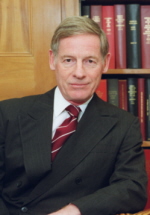 Dr. Harvey Mansfield